A tiny jungle microbiome
My Sourdough Starter Is a Tropical Ecosystem
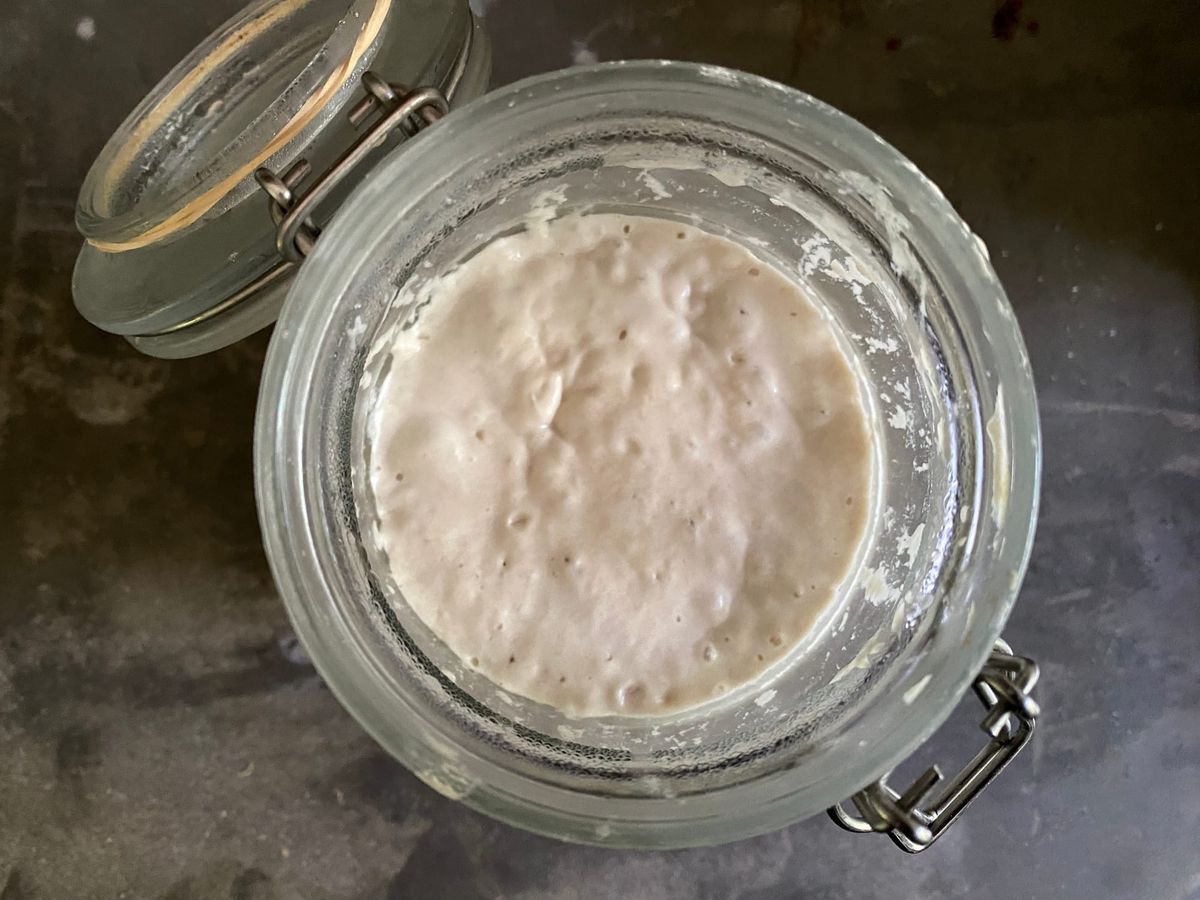
There is a small glass jar sitting on my kitchen counter in Nosara.
Inside it is flour, water, and something invisible.
Something alive.
My sourdough starter.
At first glance it looks simple — a creamy, bubbling paste that rises and falls with quiet rhythm. But if you zoom in far enough, what you find is not a mixture. It is an ecosystem.
A living community of wild yeast and bacteria working together.
And in a place like Costa Rica, that ecosystem is uniquely alive.
A Microbial Jungle
Traditional sourdough starters are created through wild fermentation. There is no commercial yeast involved. Instead, microbes from the surrounding environment settle into the mixture of flour and water and begin to grow.
Wild yeasts.
Lactic acid bacteria.
Other microscopic organisms that naturally live in the air around us.
Researchers have identified dozens of microbial species living inside traditional sourdough starters. These microbes feed on the carbohydrates in flour and begin breaking them down through fermentation.
As they work, they produce organic acids, enzymes, and gases that give sourdough its distinctive flavor, texture, and digestibility.
But what fascinates me most is this:
Those microbes don’t come from a factory.
They come from a place.
Fermentation Is a Dialogue With the Environment
Every sourdough starter in the world is different.
The microbial community in a bakery in San Francisco will not be the same as one in a farmhouse in France. The microbes come from the flour, the hands that mix the dough, the surfaces in the kitchen, and the air itself.
Which means my starter here in Nosara is quietly collecting microbes from the tropical environment around my home.
The warm air.
The sea breeze.
The jungle.
In a very real sense, my starter is becoming a microbial reflection of the place where I live.
A tiny tropical ecosystem sitting on my counter.
Ancient Food Culture
For most of human history, all bread was made this way.
Before commercial yeast was invented in the nineteenth century, bread was fermented slowly using wild starters that were often passed down through generations.
Fermentation wasn’t a trend or a health hack. It was simply how people prepared grains so they would be more digestible and nourishing.
During fermentation, the microbes begin breaking down compounds in the flour that can interfere with mineral absorption. They also start digesting some of the starches and proteins.
The result is a bread that is often easier for the body to process than modern fast-risen bread.
But beyond the nutritional science, fermentation represents something deeper.
It is a relationship with living food.
Feeding the Gut Ecosystem
In recent years scientists have begun to understand that our gut microbiome functions much like a rainforest.
Thousands of species interacting, competing, and cooperating.
And just like any ecosystem, diversity matters.
Research from large microbiome studies has shown that the strongest dietary predictor of gut microbial diversity is not whether someone follows a vegan or omnivore diet.
It’s how many different plants they eat each week.
This idea has become a cornerstone of my Jungle Momma method — aiming for at least sixty different plant foods each week to nourish the microbial community in the gut.
Sourdough fits beautifully into this philosophy.
The fermentation process transforms the grain and produces compounds that feed beneficial gut bacteria. Even though the microbes themselves do not survive baking, the fermentation byproducts remain.
It’s another small way of supporting the complex ecosystem inside the body.
A Living Kitchen
When I feed my starter, it reminds me that food does not have to be sterile, packaged, or disconnected from the natural world.
Food can be alive.
It can carry the fingerprints of the place where it was made.
In a tropical kitchen in Nosara, that means warm air drifting in from the jungle, a counter scattered with herbs and seeds, and a jar of bubbling sourdough quietly fermenting in the corner.
A tiny microbial jungle.
A reminder that nourishment is not just about calories or macros.
Sometimes it’s about participating in the ancient and beautiful relationship between humans, microbes, plants, and place.